A Sanskrit scholar and social reformer who translated the Bible into Marathi and founded a refuge that changed the lives of thousands of widows and orphans.
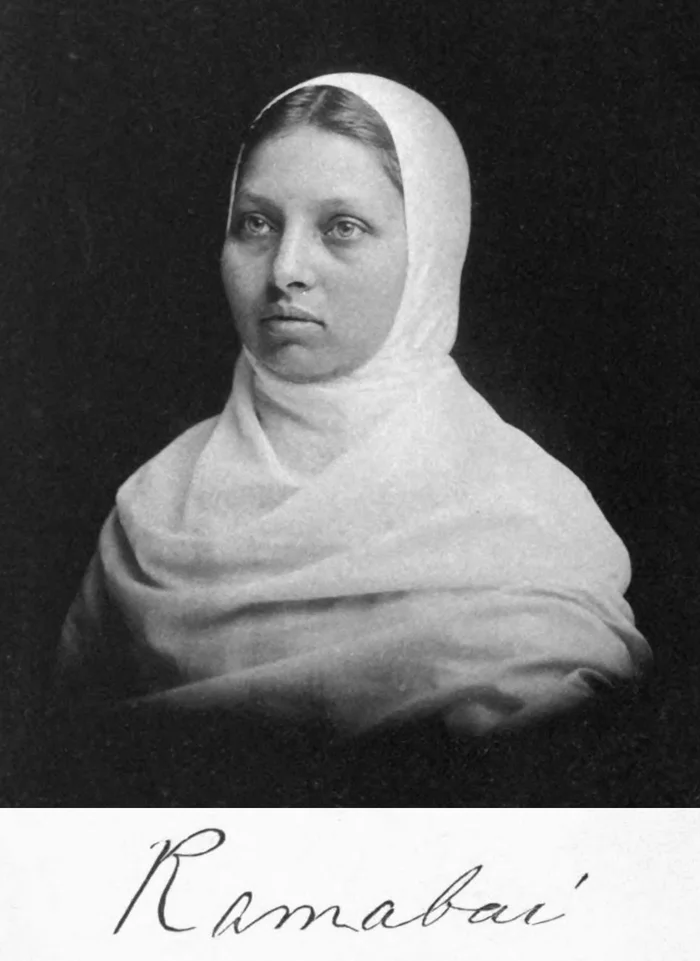
Born in 1858 into a high-caste Hindu family, Ramabai Dongre received, even as a girl, an education unusual for the standards of her time: her father trained her in classical Sanskrit, to the point that she became recognized as one of the country's most respected scholars — the honorific title "Pandita" recognizes exactly that scholarship. Her life, however, would take a turn no one in her family could have predicted.
After the deaths of her parents and husband, Ramabai devoted herself to the cause of Indian women — especially widows, treated with great social harshness under the customs of the time. Travels to England and the United States brought her closer to Christianity, to which she converted while still deeply studying the Scriptures. Unlike Western missionaries arriving in India from outside, Ramabai carried the authority of someone who knew Hinduism from within — and she argued that the Christian faith in India should be expressed through Indian culture, not a mold imported from the West.
Back in India, she founded near Pune (then Poona) a home for young widows and orphans called Mukti — "salvation," in Sanskrit. What began as a small shelter grew into a large community, with a school, vocational training, and farm work, sustained by the faith that God would provide, in the same spirit as George Müller and his orphanages in England. Ramabai also translated the Bible directly from Hebrew and Greek into Marathi, the language of her region.
In January 1905, concerned about the spiritual needs of the young women in her care, Ramabai called together a group of volunteers to pray daily for revival. The group grew from 70 to more than 500 young women gathered in prayer twice a day. In June of that year, a powerful move of the Holy Spirit swept through the Mukti community — an episode historians of the Pentecostal movement recognize as one of the most significant parallel revivals of the early 20th century, occurring almost at the same time as the Azusa Street Revival in the United States, without any contact between the two movements. From the Mukti community came dozens of women who carried the same fervor to churches throughout the region.